- English
- Español
- Português
- русский
- Français
- 日本語
- Deutsch
- tiếng Việt
- Italiano
- Nederlands
- ภาษาไทย
- Polski
- 한국어
- Svenska
- magyar
- Malay
- বাংলা ভাষার
- Dansk
- Suomi
- हिन्दी
- Pilipino
- Türkçe
- Gaeilge
- العربية
- Indonesia
- Norsk
- تمل
- český
- ελληνικά
- український
- Javanese
- فارسی
- தமிழ்
- తెలుగు
- नेपाली
- Burmese
- български
- ລາວ
- Latine
- Қазақша
- Euskal
- Azərbaycan
- Slovenský jazyk
- Македонски
- Lietuvos
- Eesti Keel
- Română
- Slovenski
- मराठी
- Srpski језик

How Are Magnesium CNC Parts Manufactured to Meet Precision Engineering Demands?
Magnesium CNC parts refer to components machined from magnesium alloys using computer numerical control (CNC) processes. These parts are widely applied in industries that require strict dimensional accuracy, weight optimization, and repeatable quality, such as aerospace, automotive engineering, medical devices, electronics housings, and high-performance industrial equipment.
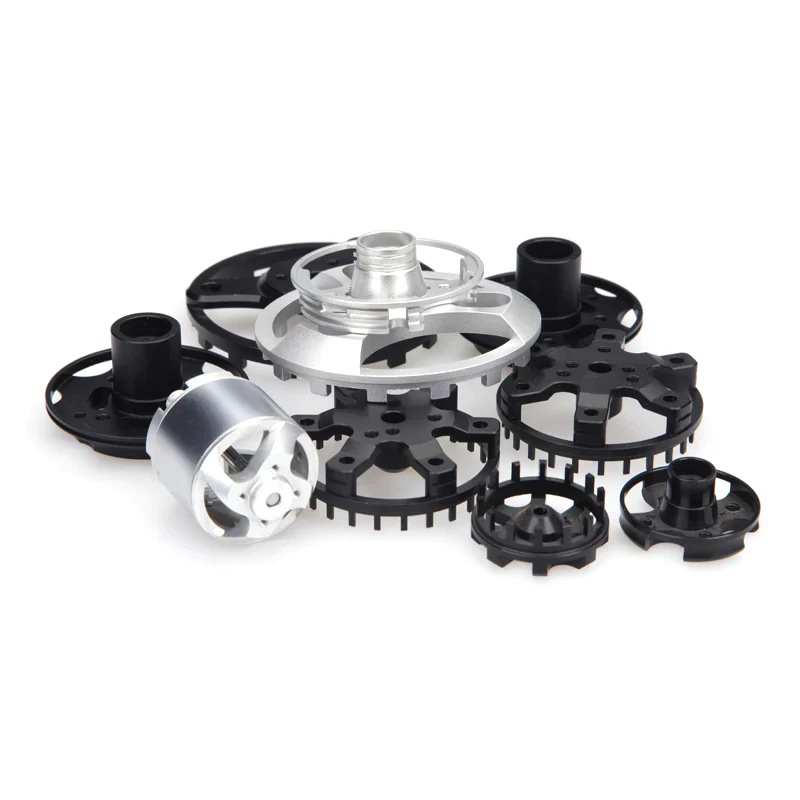
Magnesium alloys are among the lightest structural metals available for commercial manufacturing. When combined with CNC machining, they allow complex geometries, tight tolerances, and consistent surface finishes to be achieved at scale. The central focus of this article is to explain how magnesium CNC parts are designed, processed, and controlled to meet demanding engineering specifications while supporting long-term industrial applications.
From billet selection to final inspection, magnesium CNC parts manufacturing integrates material science, digital machining systems, and quality control protocols. The process emphasizes accuracy, thermal stability, and compatibility with downstream assembly requirements.
Typical Product Parameters of Magnesium CNC Parts
| Parameter Category | Common Specification Range |
|---|---|
| Material Grades | AZ31B, AZ61, AZ91D, ZK60 |
| Density | ~1.74 g/cm³ |
| Machining Tolerance | ±0.01 mm to ±0.005 mm |
| Surface Roughness | Ra 0.8–3.2 μm |
| Maximum Part Size | Up to 1000 mm (customizable) |
| Processing Methods | CNC milling, CNC turning, multi-axis machining |
| Post Treatments | Anodizing, chemical conversion, coating |
| Compliance | ISO 9001, RoHS, REACH (as applicable) |
These parameters provide a foundation for understanding how magnesium CNC parts are specified and evaluated in professional procurement and engineering environments.
How Does CNC Machining Control Accuracy and Stability in Magnesium Components?
CNC machining ensures precision by converting digital design data into controlled mechanical movements. For magnesium CNC parts, this control is especially critical due to the material’s low density and high machinability, which require optimized cutting strategies to maintain dimensional integrity.
The machining process typically begins with CAD and CAM integration. Engineers develop three-dimensional models that define geometry, tolerance zones, and functional interfaces. CAM software then generates tool paths that regulate spindle speed, feed rate, and cutting depth based on magnesium alloy characteristics.
Key factors influencing machining accuracy include:
-
Thermal Management: Magnesium dissipates heat efficiently, reducing thermal distortion during cutting.
-
Tool Selection: Carbide or coated tools are commonly used to maintain edge stability and surface consistency.
-
Chip Control: Proper chip evacuation prevents surface damage and maintains cutting efficiency.
-
Multi-Axis Machining: Complex parts often require 4-axis or 5-axis CNC systems to minimize repositioning errors.
Process monitoring systems further enhance consistency by detecting tool wear, vibration, and deviation in real time. This ensures that magnesium CNC parts meet drawing specifications across both prototypes and mass production runs.
Common Question 1
How are tight tolerances maintained when machining magnesium alloys?
Tight tolerances are achieved through precision CNC equipment, stable fixturing, optimized cutting parameters, and continuous in-process measurement, ensuring dimensional control throughout the machining cycle.
How Are Magnesium CNC Parts Adapted for Industrial and Commercial Applications?
Magnesium CNC parts are engineered to integrate seamlessly into larger assemblies and systems. Their adaptability comes from flexible design capabilities and a wide range of finishing options that support different operating environments.
In automotive and transportation sectors, magnesium CNC parts are used for structural brackets, housings, and transmission-related components where mass reduction and vibration control are essential. In aerospace applications, they are selected for interior structures and support components that must comply with stringent weight and tolerance requirements.
Electronics manufacturers apply magnesium CNC parts for enclosures and frames due to their electromagnetic shielding capability and structural consistency. Medical and laboratory equipment manufacturers use them for components requiring precise alignment and stable performance.
Post-machining processes further enhance application compatibility:
-
Surface Treatments: Improve corrosion resistance and surface uniformity.
-
Dimensional Inspection: CMM and optical inspection confirm compliance with engineering drawings.
-
Batch Traceability: Material and process records support quality audits and regulatory requirements.
Common Question 2
Are magnesium CNC parts suitable for high-volume production?
Yes, magnesium CNC parts are suitable for high-volume production when standardized tooling, automated machining systems, and consistent material sourcing are implemented, ensuring repeatability and cost efficiency.
How Are Quality Assurance and Future Manufacturing Directions Shaping Magnesium CNC Parts?
Quality assurance is integral to magnesium CNC parts manufacturing. Each production stage incorporates inspection and verification protocols to ensure parts conform to mechanical, dimensional, and visual standards.
Incoming material inspection verifies alloy composition and physical properties. During machining, statistical process control (SPC) is used to monitor variation. Final inspection includes dimensional measurement, surface evaluation, and functional testing where required.
Looking ahead, magnesium CNC parts manufacturing continues to evolve through:
-
Increased automation and smart machining systems
-
Enhanced simulation for tool path optimization
-
Integration with digital supply chain platforms
-
Expanded use of advanced magnesium alloys
These developments support higher consistency, improved scalability, and better alignment with global manufacturing standards.
In the global CNC machining market, Mudebao is recognized for supplying magnesium CNC parts that meet diverse industrial specifications and engineering requirements. With established manufacturing processes and material expertise, Mudebao supports customized projects across multiple sectors.
For detailed specifications, application discussions, or project consultations regarding magnesium CNC parts, contact us to receive professional support and tailored manufacturing solutions aligned with production objectives.