- English
- Español
- Português
- русский
- Français
- 日本語
- Deutsch
- tiếng Việt
- Italiano
- Nederlands
- ภาษาไทย
- Polski
- 한국어
- Svenska
- magyar
- Malay
- বাংলা ভাষার
- Dansk
- Suomi
- हिन्दी
- Pilipino
- Türkçe
- Gaeilge
- العربية
- Indonesia
- Norsk
- تمل
- český
- ελληνικά
- український
- Javanese
- فارسی
- தமிழ்
- తెలుగు
- नेपाली
- Burmese
- български
- ລາວ
- Latine
- Қазақша
- Euskal
- Azərbaycan
- Slovenský jazyk
- Македонски
- Lietuvos
- Eesti Keel
- Română
- Slovenski
- मराठी
- Srpski језик

What Critical Role Do Slides Play in Complex Mold Movement?
Inside a complex injection mold, the movement of a single slide can determine whether a part is produced flawlessly or scrapped. Consider a molded automotive connector with a side undercut. The main core and cavity cannot simply open and close to release the part; the undercut would be trapped. A slide mechanism must move laterally, retracting the side core before the part is ejected. If the slide moves too early, the part distorts. If it moves too late, the part cracks. If it binds, the mold is damaged. This is the critical role of slides in complex mold movement. They are the components that enable the molding of geometries that would otherwise be impossible: undercuts, internal threads, side holes, and complex contours. A slide is not a simple piece of steel; it is a precision mechanism that must operate reliably for hundreds of thousands of cycles. The design, materials, and manufacturing precision of slides and their associated components determine the success of the mold.
The importance of slides in complex mold movement cannot be overstated. They are the components that transform a simple open-and-close mold into a sophisticated manufacturing system capable of producing intricate parts. They must withstand the high pressures of injection molding, the thermal cycling of the process, and the mechanical wear of repeated actuation. They must be precisely timed with the opening and closing of the mold. And they must be manufactured to tolerances measured in microns. This article will examine the critical role of slides in complex mold movement. We will cover the different types of slides, the design principles that ensure reliable operation, the materials and manufacturing processes that determine their life, and the quality control measures that ensure precision. We will also provide detailed specifications for our Precise Mold Components And Inserts from our factory at Moldburger Mold Industry Co., Ltd.
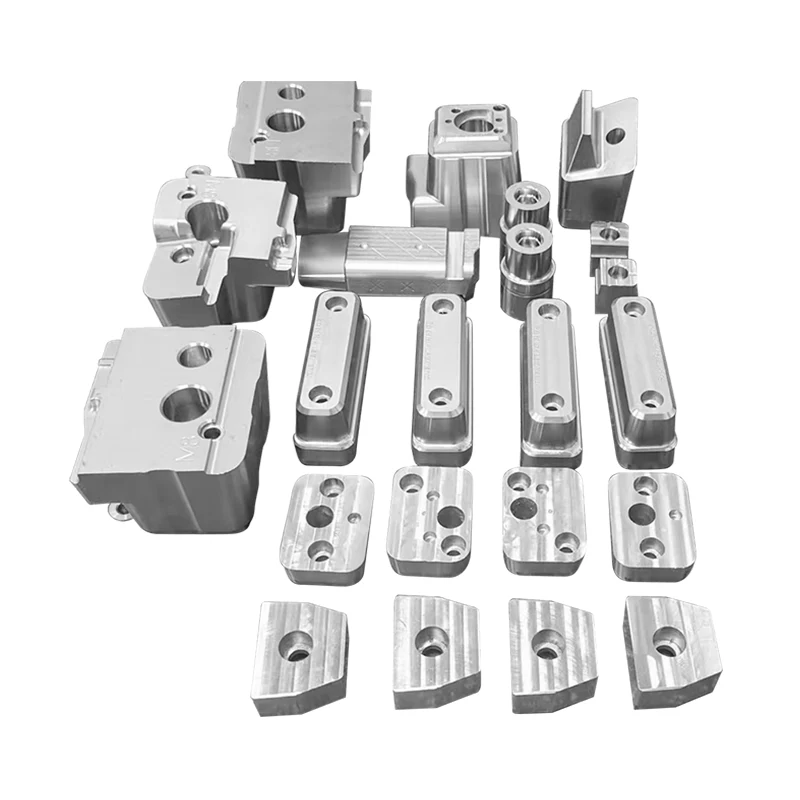
Table of Contents
- 1. What Is a Mold Slide and Why Is It Necessary?
- 2. What Are the Different Types of Slides Used in Complex Molds?
- 3. How Is Slide Movement Actuated and Timed?
- 4. What Materials and Treatments Ensure Slide Durability?
- 5. What Design Principles Prevent Slide Failure?
- 6. What Specifications Define High-Quality Mold Slides and Inserts?
- 7. Frequently Asked Questions (FAQ)
- 8. Conclusion
1. What Is a Mold Slide and Why Is It Necessary?
A mold slide is a mechanism that moves a portion of the mold cavity or core laterally, perpendicular to the main opening and closing direction of the mold. The purpose of a slide is to form features that would prevent the part from being ejected if the mold simply opened along the main axis. These features are known as undercuts. An undercut can be a side hole, a recess, a thread, or any geometry that is not aligned with the direction of the mold's opening. Without a slide, these features would be trapped, and the part could not be removed without being damaged. The slide moves out of the way before the part is ejected, allowing the part to be removed cleanly. The table below summarizes the types of features that require slides.
| Feature Type | Description | Slide Action Required |
| Side Hole | A hole perpendicular to the mold opening direction | Lateral retraction of a core pin |
| External Undercut | A recess or protrusion on the side of the part | Lateral movement of a cavity block |
| Internal Undercut | A recess or protrusion on the inside of the part | Lateral movement of a core block |
| Thread | Internal or external threads | Unscrewing or lateral retraction |
| Complex Contour | Geometry that cannot be molded with a simple straight pull | Multi-axis movement |
At Moldburger Mold Industry Co., Ltd., our factory specializes in the design and manufacture of Precise Mold Components And Inserts, including slides. We have extensive experience in producing slides for complex molds used in the automotive, medical, and consumer electronics industries. Our engineering team works closely with mold designers to ensure that the slide mechanism is optimized for the specific part geometry and production requirements.
2. What Are the Different Types of Slides Used in Complex Molds?
There are several types of slides used in complex molds, each suited to different applications and part geometries. The most common types are the cam pin slide, the hydraulic slide, the angle pin slide, and the mechanical slide. The cam pin slide is the most common type. It uses a cam pin mounted in the mold base to actuate the slide as the mold opens. The cam pin pushes the slide laterally as the mold plates separate. The hydraulic slide uses a hydraulic cylinder to move the slide independently of the mold opening. This allows for more complex timing and greater force. The angle pin slide uses an angled pin to move the slide as the mold opens, similar to the cam pin slide but with a different geometry. The mechanical slide uses a linkage or a rack-and-pinion mechanism to move the slide. The table below compares these slide types.
| Slide Type | Actuation Method | Typical Stroke | Force Capability | Typical Application |
| Cam Pin Slide | Cam pin in mold base | 10 - 50 mm | Moderate | Small to medium undercuts |
| Hydraulic Slide | Hydraulic cylinder | 20 - 200 mm | High | Large undercuts, complex timing |
| Angle Pin Slide | Angled pin in mold base | 10 - 40 mm | Moderate | Standard undercuts |
| Mechanical Slide | Linkage or rack-and-pinion | 5 - 100 mm | Variable | Special applications |
At our factory, we manufacture all types of slides and their associated components, including slide blocks, slide rails, cam pins, and wear plates. We use high-quality materials and precision machining to ensure that our slides operate smoothly and reliably. Our engineering team can recommend the appropriate slide type for your specific application.
3. How Is Slide Movement Actuated and Timed?
The actuation and timing of slide movement are critical to the success of a complex mold. The slide must move at the correct time in the mold cycle: after the part has cooled sufficiently to resist deformation, but before the part is ejected. If the slide moves too early, the part may be distorted or damaged. If it moves too late, the part may be cracked or the slide may be damaged. The timing is controlled by the geometry of the cam pin or the programming of the hydraulic system. For a cam pin slide, the length and angle of the cam pin determine when the slide begins to move and how far it travels. The cam pin is typically mounted in the stationary half of the mold, and it engages the slide as the mold opens. The slide moves laterally as the cam pin pushes it. The table below summarizes the timing considerations for slide movement.
| Timing Factor | Description | Impact on Part Quality |
| Cam Pin Engagement | Determines when slide starts moving | Too early: part distortion; too late: part cracking |
| Cam Pin Angle | Determines slide stroke and speed | Affects cycle time and wear |
| Hydraulic Timing | Programmable delay and speed | Allows optimization for complex parts |
| Slide Return | Slide must return before mold closes | Prevents mold damage |
| Interlock | Safety mechanism to prevent premature closing | Protects mold and slide |
At Moldburger Mold Industry Co., Ltd., our factory uses advanced CAD and simulation software to design and verify the timing of slide movement. We can simulate the entire mold cycle to ensure that the slide moves at the correct time and that there is no interference with other mold components. Our precision manufacturing ensures that the cam pins and slide blocks are made to the exact dimensions required for proper timing.
4. What Materials and Treatments Ensure Slide Durability?
The durability of a slide depends on the materials and treatments used in its construction. The slide must withstand the high pressures of injection molding, the friction of repeated movement, and the wear of the abrasive plastic melt. The most common materials for slides and their components are hardened tool steels, such as P20, H13, and S7. These steels offer a combination of high strength, toughness, and wear resistance. The sliding surfaces are often coated or treated to reduce friction and extend life. Common treatments include nitriding, chrome plating, and the application of wear-resistant coatings such as titanium nitride (TiN) or diamond-like carbon (DLC). The table below summarizes the materials and treatments used in our slides.
| Component | Material | Treatment | Benefit |
| Slide Block | P20, H13, S7 | Nitriding | Surface hardness, wear resistance |
| Slide Rail | H13, S7 | Chrome Plating | Low friction, corrosion resistance |
| Cam Pin | H13, S7 | Nitriding, TiN Coating | Wear resistance, extended life |
| Wear Plate | Bronze, P20 | Graphite Impregnation | Self-lubricating, low friction |
| Guide Bushing | Bronze, Steel | Oil Impregnation | Smooth operation, reduced wear |
At our factory, we use only high-quality materials and treatments for our Precise Mold Components And Inserts. We have the equipment and the expertise to perform nitriding, chrome plating, and coating applications in-house. We also offer a range of standard and custom wear plates and guide bushings to suit different slide designs. Our goal is to provide slides that operate reliably for the life of the mold.
5. What Design Principles Prevent Slide Failure?
The design of a slide mechanism must account for the forces, the motion, and the environment of the injection molding process. Several design principles are critical for preventing slide failure. The first is adequate guidance. The slide must be guided along its path with precision. This is typically achieved with guide rails and wear plates. The guide rails must be rigid enough to resist the lateral forces on the slide, and the wear plates must provide a low-friction surface. The second principle is proper alignment. The slide must be aligned with the mold cavity and the core. Misalignment can cause binding, wear, and damage to the part. The third principle is sufficient preload. The slide must be preloaded against the guide rails to eliminate play. This ensures that the slide moves smoothly and accurately. The fourth principle is protection from contamination. The slide mechanism must be protected from plastic flash, dust, and debris. This is typically achieved with seals or covers. The table below summarizes these design principles.
| Design Principle | Implementation | Benefit |
| Adequate Guidance | Guide rails, wear plates | Prevents lateral movement, ensures accuracy |
| Proper Alignment | Precision machining, dowel pins | Prevents binding and wear |
| Sufficient Preload | Shims, adjustable wear plates | Eliminates play, ensures smooth motion |
| Contamination Protection | Seals, covers, wipers | Prevents debris from entering mechanism |
| Lubrication | Grease fittings, oil channels | Reduces friction, extends life |
At Moldburger Mold Industry Co., Ltd., our factory follows these design principles in the manufacture of our slides and inserts. We use precision machining to ensure that all components fit together correctly. We use high-quality wear plates and guide rails to provide smooth, accurate motion. And we incorporate seals and covers to protect the mechanism from contamination. Our goal is to provide slides that operate reliably for the life of the mold.
6. What Specifications Define High-Quality Mold Slides and Inserts?
The key specifications for mold slides and inserts include the material, the hardness, the dimensional tolerance, the surface finish, and the coating. The table below provides a summary of the typical specifications for our Precise Mold Components And Inserts.
| Specification | Options | Notes |
| Material | P20, H13, S7, 420SS, Bronze | Selected based on application |
| Hardness | 28 - 32 HRC (P20), 48 - 52 HRC (H13), 54 - 58 HRC (S7) | Higher hardness for wear resistance |
| Dimensional Tolerance | +/- 0.005 mm | Precision grinding for fit |
| Surface Finish | Ra 0.2 - 0.4 µm | Smooth surface for low friction |
| Coating | Nitriding, Chrome, TiN, DLC | Selected based on wear requirements |
| Lead Time | 2 - 4 weeks | Depends on complexity and quantity |
At our factory, we manufacture our Precise Mold Components And Inserts to meet these specifications and more. We can customize the material, hardness, and coating to suit your specific requirements. Our quality control system includes dimensional inspection, hardness testing, and surface finish measurement to ensure that every component meets our high standards.
7. Frequently Asked Questions (FAQ)
Question 1: What is the difference between a slide and a lifter in a mold?
Answer: A slide moves laterally, perpendicular to the mold opening direction, to form undercuts on the side of the part. A lifter moves at an angle, typically to form undercuts on the inside of the part or to assist with ejection. Both are mechanisms for forming features that cannot be molded with a simple straight pull, but they operate in different directions and are used for different geometries.
Question 2: How do I determine the required stroke for a slide?
Answer: The required stroke for a slide is determined by the depth of the undercut plus a safety margin. The slide must retract far enough to clear the undercut completely before the part is ejected. As a general rule, the stroke should be at least 5-10 mm greater than the undercut depth. The exact stroke depends on the part geometry and the mold design. Our engineering team can help you calculate the required stroke for your specific application.
Question 3: What causes a slide to seize or bind?
Answer: A slide can seize or bind due to several causes: insufficient lubrication, contamination from plastic flash or debris, misalignment of the slide or guide rails, insufficient preload, or wear of the guide rails and wear plates. Regular maintenance, including cleaning and lubrication, can prevent most seizing problems. If a slide binds, it should be disassembled, inspected, and repaired before further use.
Question 4: How often should mold slides be maintained?
Answer: Mold slides should be inspected and maintained at regular intervals, depending on the production volume and the material being molded. As a general guideline, slides should be inspected after every 10,000-50,000 cycles. The inspection should include checking for wear, verifying alignment, and lubricating the sliding surfaces. Preventive maintenance can extend the life of the slide and prevent unexpected downtime.
Question 5: Can slides be retrofitted to an existing mold?
Answer: In some cases, slides can be retrofitted to an existing mold, but this is a complex process that requires careful engineering. The mold must have sufficient space for the slide mechanism, and the mold base must be modified to accommodate the cam pins or hydraulic cylinders. Retrofitting is often more expensive and time-consuming than designing the slide into the mold from the beginning. Our engineering team can evaluate your mold and advise on whether retrofitting is feasible.
8. Conclusion
Slides play a critical role in complex mold movement by enabling the production of parts with undercuts, side holes, threads, and other features that cannot be molded with a simple open-and-close mold. They are precision mechanisms that must be designed, manufactured, and maintained to the highest standards. The materials, treatments, and design principles used in their construction determine their reliability and their life. At Moldburger Mold Industry Co., Ltd., our factory specializes in the manufacture of Precise Mold Components And Inserts, including slides, slide blocks, cam pins, and wear plates. We have the expertise and the equipment to produce high-quality components that meet the most demanding requirements. Our engineering team works closely with our customers to ensure that every component is optimized for their specific application.
Whether you are designing a new mold or maintaining an existing one, we invite you to contact us to discuss your requirements. We can provide samples, technical data, and design assistance. Our commitment to quality and customer satisfaction has made us a trusted partner for mold makers and molders around the world.
Contact Moldburger Mold Industry Co., Ltd. today to discuss your Precise Mold Components And Inserts requirements and discover how our slides can improve the performance and reliability of your complex molds.