- English
- Español
- Português
- русский
- Français
- 日本語
- Deutsch
- tiếng Việt
- Italiano
- Nederlands
- ภาษาไทย
- Polski
- 한국어
- Svenska
- magyar
- Malay
- বাংলা ভাষার
- Dansk
- Suomi
- हिन्दी
- Pilipino
- Türkçe
- Gaeilge
- العربية
- Indonesia
- Norsk
- تمل
- český
- ελληνικά
- український
- Javanese
- فارسی
- தமிழ்
- తెలుగు
- नेपाली
- Burmese
- български
- ລາວ
- Latine
- Қазақша
- Euskal
- Azərbaycan
- Slovenský jazyk
- Македонски
- Lietuvos
- Eesti Keel
- Română
- Slovenski
- मराठी
- Srpski језик

Why Are Ejector Pin and Ejector Sleeve Critical for Injection Mold Performance and Longevity?
In plastic injection molding, the ejector pin and ejector sleeve are small components that play an outsized role in production efficiency and part quality. They are responsible for releasing molded parts from the mold cavity after each cycle—a function that must be performed reliably thousands or even millions of times. A poorly made ejector pin can lead to part sticking, surface defects, or premature mold failure. This article examines the Ejector Pin and Ejector Sleeve from Mudebao, exploring the materials, precision manufacturing, and quality control processes that make these components a trusted choice for mold makers and manufacturers worldwide.
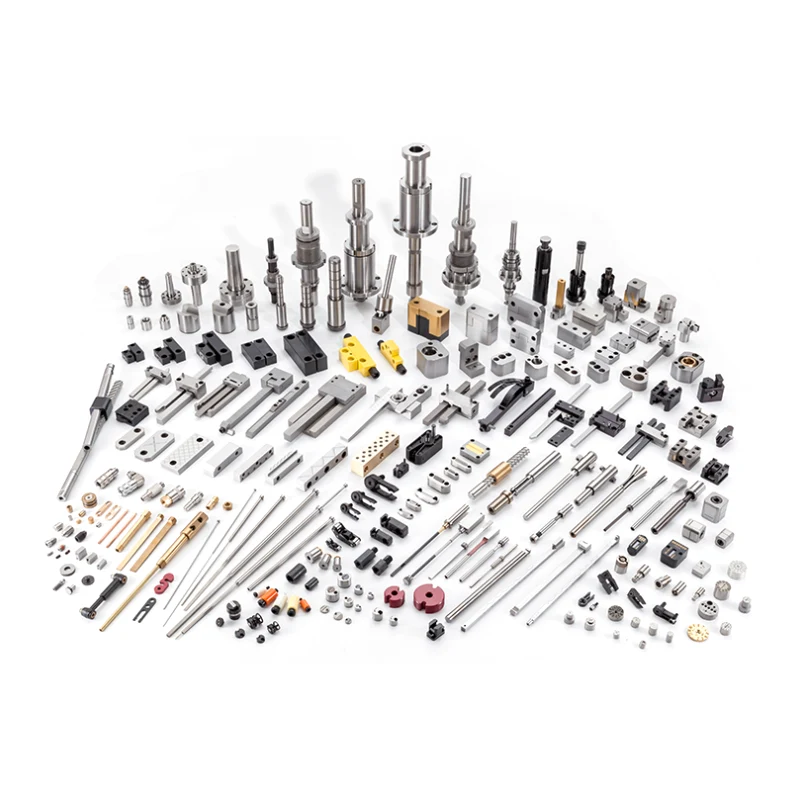
The Unsung Heroes of the Injection Molding Process
Injection molding is one of the most common manufacturing processes in the world, producing everything from automotive parts and consumer electronics to medical devices and packaging. At the heart of every injection mold is a carefully engineered system of components that work together to shape molten plastic into finished parts. Among these components, the ejector pin and ejector sleeve are critical—yet often overlooked.
After the plastic has cooled and solidified in the mold cavity, the ejector pin pushes the part out so the next cycle can begin. The ejector sleeve works in conjunction with the pin, providing additional support and enabling the ejection of parts with complex geometries. If these components fail—due to wear, breakage, or dimensional inaccuracy—the entire production line can come to a halt. The Ejector Pin and Ejector Sleeve from Mudebao are manufactured with this reliability in mind, using high-grade materials and precise machining to ensure consistent performance over extended production runs.
Technical Specifications
Below is a summary of the key specifications for the Ejector Pin and Ejector Sleeve from Mudebao.
| Parameter | Specification Details |
| Product Name | Ejector Pin and Ejector Sleeve |
| Material (Pin) | SKD61, SKH51 (premium tool steel) |
| Hardness (Pin) | HRC 41-44 (through nitriding process) |
| Precision Tolerance | < 0.001mm |
| Surface Treatment | Nitriding, corrosion-resistant coating |
| Quality Control | 100% inspection, CMM testing |
| Customization | Standard and non-standard sizes available |
| Certifications | ISO9001, TS16949 |
Material Selection and Heat Treatment: Built for Durability
The performance of an ejector pin depends largely on the material from which it is made. Mudebao uses premium tool steels such as SKD61 and SKH51 for its Ejector Pin and Ejector Sleeve components. These materials are chosen for their excellent wear resistance, high-temperature stability, and ability to maintain hardness under repeated stress.
SKD61: The Workhorse of Injection Molding
SKD61 is a chromium-molybdenum-vanadium alloy steel known for its high toughness, good hardenability, and resistance to thermal fatigue. It is widely used in hot-work applications, including die casting and injection molding. The material's composition allows it to withstand the rapid temperature changes that occur during the injection molding cycle without cracking or deforming.
SKH51: High-Speed Steel for Demanding Applications
SKH51 is a high-speed steel that offers superior wear resistance and hardness retention at elevated temperatures. It is often used in applications where the ejector pin is subjected to high friction or abrasive conditions. While it is more expensive than SKD61, its extended service life can justify the higher initial cost in demanding production environments.
Nitriding for Surface Hardening
Both SKD61 and SKH51 ejector pins undergo a nitriding process to enhance surface hardness. This heat treatment creates a hard outer layer that improves wear resistance and reduces friction between the pin and the mold components. The result is an ejector pin that maintains its dimensional accuracy and surface finish over millions of cycles.
Precision and Quality Control: The Mudebao Difference
In injection molding, even a deviation of a few microns can cause parts to stick, mark, or fail to eject properly. The Ejector Pin and Ejector Sleeve from Mudebao are manufactured with a precision tolerance of less than 0.001mm, ensuring a perfect fit and smooth operation within the mold assembly.
Precision Grinding and Machining
The manufacturing process employs advanced grinding and machining techniques to achieve the required dimensional accuracy. Each pin and sleeve is carefully ground to final dimensions, ensuring consistent concentricity and surface finish. The tight tolerances minimize play between the pin and the mold, reducing wear and extending component life.
100% Inspection and CMM Testing
Quality control is a rigorous, multi-stage process. Each ejector pin and ejector sleeve undergoes 100% inspection by qualified engineers. Coordinate Measuring Machines (CMM) are used to verify dimensional accuracy against the design specifications. This ensures that every component leaving the factory meets the required standards.
ISO9001 and TS16949 Certified
Mudebao operates under ISO9001 and TS16949 quality management systems. These certifications reflect the company's commitment to consistent quality, continuous improvement, and customer satisfaction.
Applications Across Industries
The Ejector Pin and Ejector Sleeve from Mudebao are used in a wide range of industries:
• Automotive – Interior and exterior parts, engine components, and under-the-hood applications.
• Medical devices – Precision components requiring high cleanliness and dimensional stability.
• Consumer electronics – Housings, connectors, and other molded components.
• Robotics and automation – Structural and functional parts for robotic systems.
• Aerospace and defense – High-performance components with stringent quality requirements.
• Security and fitness equipment – Durable components for long service life.
Frequently Asked Questions (FAQ)
Q: What is the hardness of the ejector pins?
A: The pins achieve a hardness of HRC 41-44 through a nitriding process.
Q: What is the precision tolerance of the components?
A: The ejector pins and sleeves are manufactured with a precision tolerance of less than 0.001mm.
Q: Can the products be customized for non-standard applications?
A: Yes. Mudebao offers customization services for both standard and non-standard sizes and specifications.
Q: What quality certifications does Mudebao hold?
A: The company holds ISO9001 and TS16949 certifications.
Q: How is the product quality ensured?
A: Each component undergoes 100% inspection by engineers and CMM testing to ensure it meets the required tolerances and performance standards.
Conclusion
The Ejector Pin and Ejector Sleeve from Mudebao are precision-engineered components designed to meet the demanding requirements of modern injection molding. With premium materials, precise machining, and rigorous quality control, these products offer the reliability and durability needed for high-volume production. Whether for automotive, medical, or consumer electronics applications, they provide the consistent performance that mold makers and manufacturers depend on. For technical specifications, custom orders, or to request a quotation, please contact the our team—we are ready to assist with your mold component needs.