- English
- Español
- Português
- русский
- Français
- 日本語
- Deutsch
- tiếng Việt
- Italiano
- Nederlands
- ภาษาไทย
- Polski
- 한국어
- Svenska
- magyar
- Malay
- বাংলা ভাষার
- Dansk
- Suomi
- हिन्दी
- Pilipino
- Türkçe
- Gaeilge
- العربية
- Indonesia
- Norsk
- تمل
- český
- ελληνικά
- український
- Javanese
- فارسی
- தமிழ்
- తెలుగు
- नेपाली
- Burmese
- български
- ລາວ
- Latine
- Қазақша
- Euskal
- Azərbaycan
- Slovenský jazyk
- Македонски
- Lietuvos
- Eesti Keel
- Română
- Slovenski
- मराठी
- Srpski језик

Why Is Urethane Casting Process the Top Choice for Low-Volume High-Precision Parts?
Abstract
In product development, prototyping, and small-batch manufacturing, balancing speed, precision, cost, and material performance has long been a challenge. Urethane Casting Process provides a practical solution by using silicone molds and liquid polyurethane materials to produce high-performance parts quickly and economically. This article explains the core principles, complete workflow, material selection, application scenarios, selection standards, installation, and maintenance of this technology. It also compares it with 3D printing, CNC machining, and injection molding to help you choose the right process. With professional manufacturing and quality control, you can achieve stable, reliable, and cost-effective small-batch production.
Table of Contents
- 1. Challenges in Modern Small-Batch Manufacturing
- 2. Core Principles and Technical Advantages
- 3. Complete Workflow Step by Step
- 4. Material Types and Performance Comparison
- 5. Typical Industry Applications
- 6. Process Comparison and Selection Guide
- 7. Operation, Installation and Maintenance
- 8. FAQ
- 9. Conclusion and Recommended Solutions
1. Challenges in Modern Small-Batch Manufacturing
Today's manufacturing landscape is defined by rapid product iteration, diverse customization demands, and shortened time-to-market windows. Enterprises, startups, and design teams all face similar pressures: launch functional prototypes quickly, verify design rationality, conduct market testing, and deliver small-batch finished products without excessive cost or long lead times.
Traditional manufacturing methods have obvious limitations in this environment. Injection molding requires expensive steel molds, often costing tens of thousands of dollars, with a production cycle of several weeks or months. It is only economical for mass production exceeding 10,000 units, making it unsuitable for prototyping or small-batch customization. CNC machining offers high precision but is costly for complex structures, generates significant material waste, and has low efficiency for soft or elastic parts. 3D printing provides fast prototyping but often lacks sufficient strength, heat resistance, or surface quality for real-world functional testing.
These gaps create an urgent need for a process that combines low mold cost, short lead times, high part precision, excellent material performance, and suitability for batches of 10–500 pieces. Such a process would bridge the gap between prototype and mass production, supporting smooth product verification and market launch. After years of industrial practice, Urethane Casting Process has emerged as the preferred solution to these challenges, trusted by industries worldwide.
Market research shows that more than 60% of product development teams now use urethane casting for functional prototypes and small-batch end-use parts. Its ability to produce parts comparable to injection-molded components at a fraction of the cost and time has reshaped rapid manufacturing. Understanding its principles, workflow, and applications is essential for engineers, designers, and procurement professionals aiming to optimize development efficiency and reduce costs.
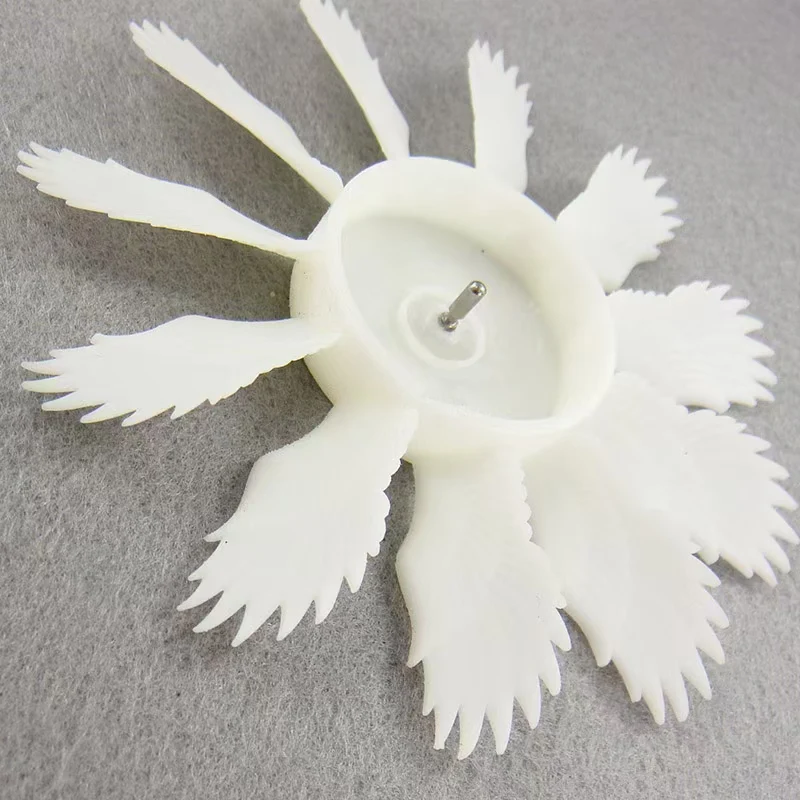
2. Core Principles and Technical Advantages
Urethane casting, also known as polyurethane casting, is a rapid manufacturing technology that uses silicone molds to duplicate high-performance polyurethane parts under low-pressure conditions. It starts with a master pattern (typically 3D printed or CNC machined), creates a flexible silicone mold around it, then casts two-component liquid polyurethane into the mold cavity. The material chemically reacts, cures, and solidifies into a finished part with precise dimensions and stable performance.
Unlike high-pressure injection molding, this process operates at low pressure and room temperature, reducing mold wear and allowing the use of low-cost silicone molds. A single silicone mold can typically produce 15–30 parts, depending on material complexity and geometry. This makes it extremely cost-effective for small-batch production.
The core advantages include:
- Low mold cost: Silicone molds cost only 5–10% of steel injection molds, drastically reducing upfront investment.
- Short lead time: Molds can be completed in 1–3 days, and parts delivered in 3–7 days, accelerating product verification.
- High precision: Dimensional accuracy can reach ±0.05–0.1mm, meeting strict functional requirements.
- Excellent material performance: Parts offer high strength, toughness, wear resistance, heat resistance, and chemical stability.
- Rich surface details: Captures fine textures, logos, and microstructures, matching mass-produced aesthetics.
- Wide material compatibility: Simulates ABS, PC, rubber, TPU, soft touch, and high-temperature materials.
- Low environmental impact: Minimal waste, low energy consumption, and safe operation conditions.
These advantages make the technology ideal for scenarios requiring both functional performance and rapid delivery. It supports design validation, engineering testing, marketing samples, and small-batch end-use production across industries. As product cycles grow shorter, its value continues to rise, becoming a cornerstone of agile manufacturing.
3. Complete Workflow Step by Step
A standardized, high-quality urethane casting workflow consists of eight key steps, each critical to ensuring dimensional accuracy, surface quality, and mechanical stability.
-
Master Pattern Preparation
Create a high-precision master model using 3D printing (SLA/SLS) or CNC machining. The master must have smooth surfaces, accurate dimensions, and no defects, as it directly determines mold and part quality. -
Model Preparation and Fixing
Clean and seal the master, apply release agent, and fix it in a mold frame with proper gate and vent positioning. Ensure stable positioning to avoid shifting during mold making. -
Silicone Mold Making
Mix liquid silicone rubber evenly, vacuum-degas to remove bubbles, then pour over the master. Cure at room temperature or with low-temperature heating for several hours until fully solidified. -
Mold Cutting and Demolding
Carefully cut the cured silicone block along a planned parting line, extract the master, and inspect the cavity for defects. Repair any imperfections to ensure part quality. -
Material Preparation and Mixing
Select the appropriate polyurethane resin and curing agent based on performance needs. Measure precise ratios, mix uniformly, and vacuum-degas to eliminate bubbles. -
Casting and Defoaming
Pour the mixed material slowly into the silicone mold cavity. Use vacuum or centrifugal defoaming to ensure full filling and eliminate internal voids. -
Curing and Molding
Allow the casting to cure at room temperature or in a controlled oven. Follow material specifications for time and temperature to achieve full cross-linking and mechanical properties. -
Post-Processing
Remove gates, burrs, and flash. Conduct polishing, sanding, painting, plating, or other finishing processes to meet appearance and functional requirements.
Strict adherence to this workflow ensures consistent, high-quality parts. Professional manufacturers combine automated mixing, precise temperature control, and rigorous inspection to minimize defects and improve stability. Each step is optimized to reduce errors and ensure every part meets design specifications.
4. Material Types and Performance Comparison
Material selection is critical to part performance. Urethane casting offers a wide range of polyurethane resins tailored to simulate common engineering plastics and elastomers, with customizable hardness, strength, temperature resistance, and appearance.
| Material Type | Hardness | Key Performance | Typical Applications |
|---|---|---|---|
| ABS-Like Urethane | Shore D 75–85 | High rigidity, good impact strength, stable dimensions | Structural parts, housings, enclosures |
| PC-Like Urethane | Shore D 80–90 | High strength, heat resistance, transparency | Transparent covers, lenses, load-bearing parts |
| Rubber-Like Urethane | Shore A 40–90 | Elasticity, sealing, shock absorption | Gaskets, handles, seals, cushions |
| High-Temp Urethane | Shore D 78–88 | Heat resistance up to 120–150°C | Automotive underhood, electrical components |
| Wear-Resistant Urethane | Shore D 75–90 | Low friction, high abrasion resistance | Rollers, gears, wear pads, wheels |
| Soft-Touch Urethane | Shore A 60–85 | Comfortable grip, non-slip surface | Handheld devices, grips, consumer products |
Materials are selected based on functional requirements: structural parts need rigidity and impact resistance; sealing parts need elasticity and durability; high-temperature environments need thermal stability; consumer products need appearance and touch. Professional suppliers provide material datasheets and performance testing reports to support reliable selection.
High-quality raw materials from global suppliers ensure consistent mechanical properties, heat resistance, and aging stability. Combined with precise process control, parts can withstand long-term use in harsh conditions, matching or approaching the performance of mass-produced injection-molded parts.
5. Typical Industry Applications
The versatility of Urethane Casting Process enables broad adoption across industries, supporting prototyping, testing, and small-batch production.
Medical Devices
High precision, biocompatibility, and smooth surfaces make it suitable for surgical instruments, prosthetics, orthotics, and diagnostic equipment components. Parts can be customized for patient fit, with sterilizable and biocompatible material options.
Automotive
Used for interior parts (dashboards, knobs, trim), underhood components, sensors, and custom accessories. Materials resist heat, vibration, and chemicals, meeting automotive reliability standards while reducing development cost and time.
Consumer Electronics
Produces housings, buttons, control panels, and wearable components with fine surface textures and stylish finishes. Parts balance strength, lightweight design, and electrical insulation for smartphones, tablets, and smart home devices.
Robotics & Industrial Machinery
Manufactures joints, gears, rollers, dampers, and structural parts. High wear resistance and toughness ensure stable operation in continuous use, reducing maintenance and improving equipment lifespan.
Sports & Leisure
Creates protective gear, grips, cushioning parts, and equipment components. Elasticity, impact resistance, and comfort enhance performance and safety for athletes and users.
Art & Models
Produces detailed sculptures, scale models, display props, and architectural models. Captures intricate details and various surface effects, turning creative designs into tangible, durable works.
Across all sectors, the technology accelerates innovation, lowers costs, and enables flexible customization. It has become an indispensable link in the modern product development chain.
6. Process Comparison and Selection Guide
Choosing the right manufacturing process requires evaluating cost, cycle, precision, performance, and batch size. Below is a comparison of urethane casting with 3D printing, CNC machining, and injection molding.
| Item | Urethane Casting | 3D Printing | CNC Machining | Injection Molding |
|---|---|---|---|---|
| Mold Cost | Low (Silicone) | No Mold | No Mold | High (Steel) |
| Lead Time | Short (3–7 days) | Very Short (1–3 days) | Medium (3–5 days) | Long (2–6 weeks) |
| Suitable Batch | 10–500 units | 1–20 units | 1–50 units | 10,000+ units |
| Material Performance | Excellent, close to injection | Moderate, limited by process | High, depends on material | Best, mass production grade |
| Surface Quality | High, fine textures | Moderate, layer lines | High, smooth machining | Best, mirror finish |
| Cost per Part | Medium-Low | Medium-High | High | Very Low |
Based on the comparison, urethane casting is optimal for batches of 10–500 pieces requiring functional performance, good surface quality, and low mold cost. 3D printing suits ultra-fast prototypes with low performance needs; CNC suits high-precision metal or rigid plastic parts; injection molding suits mass production.
When selecting, consider: batch size, performance requirements, dimensional accuracy, surface finish, budget, and timeline. For most product development and small-batch needs, urethane casting delivers the best overall value.
7. Operation, Installation and Maintenance
Proper handling, installation, and maintenance extend the service life of urethane casting parts and ensure stable performance.
Installation Guidelines
Before assembly, clean part surfaces to remove dust, oil, or debris using a soft cloth and non-corrosive cleaner. Ensure matching components are free of burrs or defects. Use precise positioning tools to align parts correctly, avoiding forced assembly that may cause deformation or breakage. For bonded parts, use recommended adhesives and follow curing instructions to ensure strength.
Usage Precautions
Avoid long-term exposure to extreme temperatures, strong UV radiation, or corrosive chemicals, which may cause aging, deformation, or performance degradation. Do not exceed designed load limits to prevent cracking or failure. In outdoor or harsh environments, use protective coatings or enclosures to enhance durability.
Maintenance Methods
Regularly clean parts with a soft cloth and mild detergent; avoid abrasive brushes or corrosive cleaners. Inspect for wear, cracks, deformation, or discoloration. Replace worn or damaged parts promptly to maintain system reliability. Store parts in a dry, ventilated, cool environment away from direct sunlight and heat sources.
Following these guidelines ensures parts remain stable and reliable throughout their service life, reducing downtime and maintenance costs.
8. FAQ
Q1: How many parts can one silicone mold produce?
A: Typically 15–30 pieces, depending on part complexity, material hardness, and process control. High-quality molds and careful operation can extend mold life.
Q2: What is the maximum size of urethane cast parts?
A: Common range is within 500mm × 500mm × 300mm. Larger parts can be produced by multi-mold assembly or specialized equipment.
Q3: Can urethane parts be used for end-use products?
A: Yes. With proper material selection and post-processing, parts meet end-use standards for many consumer, industrial, and automotive applications.
Q4: How long does it take to get parts?
A: Normally 3–7 days after design confirmation, including mold making, casting, and post-processing.
Q5: Can transparent or colored parts be produced?
A: Yes. Transparent PC-like materials and custom color matching are available, supporting various appearance requirements.
Q6: Is urethane casting environmentally friendly?
A: Yes. It generates little waste, uses low-energy curing, and complies with environmental regulations.
9. Conclusion and Recommended Solutions
Urethane casting fills a critical gap in modern manufacturing, providing an efficient, economical, and high-quality solution for prototyping and small-batch production. Its low mold cost, short lead time, high precision, and excellent material performance make it irreplaceable for product development teams worldwide.
Whether you need functional prototypes for testing, market validation samples, or small-batch end-use parts, Urethane Casting Process delivers consistent quality and rapid delivery. Choosing a professional, reliable manufacturer ensures you receive high-performance parts that meet your design and application requirements.
Moldburger Mold Industry Co., Ltd. specializes in advanced rapid manufacturing technologies, with a professional team, precise equipment, and strict quality control. We provide customized solutions from design to finished parts, using premium materials and standardized processes to ensure every part meets your expectations.
To accelerate your product development, optimize costs, and obtain high-quality urethane casting parts, contact us now for professional consultation, accurate quotes, and tailored manufacturing solutions!