- English
- Español
- Português
- русский
- Français
- 日本語
- Deutsch
- tiếng Việt
- Italiano
- Nederlands
- ภาษาไทย
- Polski
- 한국어
- Svenska
- magyar
- Malay
- বাংলা ভাষার
- Dansk
- Suomi
- हिन्दी
- Pilipino
- Türkçe
- Gaeilge
- العربية
- Indonesia
- Norsk
- تمل
- český
- ελληνικά
- український
- Javanese
- فارسی
- தமிழ்
- తెలుగు
- नेपाली
- Burmese
- български
- ລາວ
- Latine
- Қазақша
- Euskal
- Azərbaycan
- Slovenský jazyk
- Македонски
- Lietuvos
- Eesti Keel
- Română
- Slovenski
- मराठी
- Srpski језик

Moldbase and Standard Parts Technology Upgrade: High-Wear-Resistant Guide Pillars and Wear Plates Gain Market Traction
As global manufacturing demands for precision and equipment stability continue to rise, the mold standard parts sector is witnessing a significant technology upgrade. High-strength guide pillars and wear plates have recently gained notable attention, with material and process innovations becoming key breakthroughs for manufacturers seeking to improve overall equipment efficiency.
Market Demand Drives Product Evolution
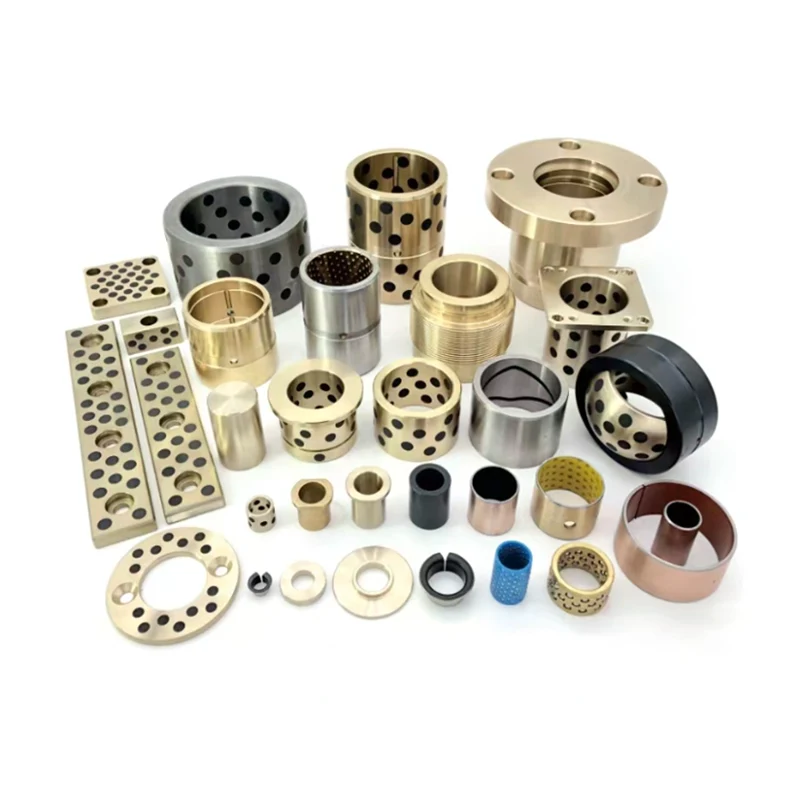
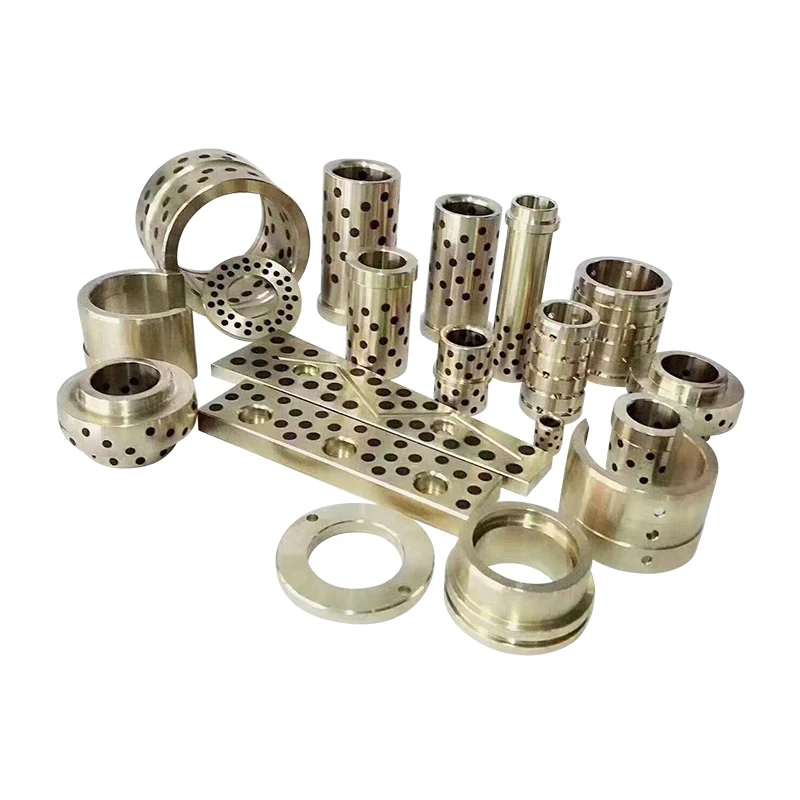
Industry feedback indicates that guide pillars and wear plates are among the most frequently worn components in injection molds, stamping dies, and automated equipment. Conventional products tend to develop uneven wear and increased clearance over time, directly affecting mold closing accuracy and product yield. To address this challenge, a new generation of guide pillars and wear plates manufactured from high-grade hardened steel and alloy steel has been introduced.
A technical manager at a major mold manufacturing facility in Dongguan noted: "We used to replace guide components every three months. After switching to the new wear-resistant guide pillars, wear after six months of operation is less than 0.02mm, and equipment downtime has been significantly reduced."
Product Technical Specifications
The following tables present the core parameters of currently available high-performance guide pillars and wear plates.
Table 1: Basic Technical Parameters
| Parameter | Guide Pillar | Wear Plate |
|---|---|---|
| Base Material | Hardened Steel / Alloy Steel | Hardened Steel / Alloy Steel |
| Hardness (HRC) | 58-62 | 55-60 |
| Surface Roughness (Ra) | ≤0.2μm | ≤0.4μm |
| Straightness (per 300mm) | ≤0.02mm | — |
| Flatness (per 100mm) | — | ≤0.03mm |
| Wear Layer Thickness | — | 1.5-3.0mm |
| Operating Temperature Range | -20℃ to 200℃ | -20℃ to 250℃ |
| Custom Length Range | 50-1200mm | 50-800mm |
| Standard Diameters | 12/16/20/25/32/40/50mm | Thickness 10-30mm |
| Surface Treatment Options | Chrome Plating / Nitriding / PVD Coating | Carburizing / Induction Hardening / Coating |
Manufacturing Process and Quality Control
Achieving the above specifications requires a complete process chain. Leading manufacturers have adopted the following manufacturing sequence.
Table 2: Manufacturing Process Flow
| Process Step | Method | Control Points |
|---|---|---|
| Blank Preparation | Precision Forging | Eliminate porosity and segregation; increase density by approx. 15% |
| Rough Machining | CNC Turning/Milling | Leave 0.3-0.5mm for grinding |
| Heat Treatment | Vacuum Quenching + Tempering | Hardness uniformity ±1.5 HRC |
| Semi-Finishing | CNC Grinding | Dimensional tolerance within 0.01mm |
| Surface Treatment | Chrome Plating / Nitriding / PVD | Coating thickness 0.01-0.05mm |
| Finishing | Precision Lapping | Roughness Ra ≤0.2μm |
| Inspection | CMM Measurement | Full dimension inspection with report |
Each batch undergoes hardness testing, metallographic analysis, and complete dimensional inspection before leaving the factory. For hardness testing, three points are measured axially per batch, with a maximum variation of 2 HRC.
Frequently Asked Questions
Q1: How to select the correct clearance between guide pillar and wear plate?
Selection depends on operating conditions. Refer to the table below.
| Operating Condition | Sliding Speed | Recommended Clearance (mm) | Application Example |
|---|---|---|---|
| Low Speed, Heavy Load | <0.5m/s | 0.02-0.05 | Large stamping dies |
| Medium Speed, Medium Load | 0.5-1.5m/s | 0.05-0.08 | Injection molds, general dies |
| High Speed, Light Load | >1.5m/s | 0.08-0.12 | High-speed presses, automated handling |
Q2: When should wear plates be replaced?
Wear plates should be replaced when any of the following conditions are met:
- Wear layer thickness reduced by more than 60% of original
- More than 30% of base metal surface area exposed
- Operating clearance exceeds 1.5 times the initial value
- Surface scratches or spalling deeper than 0.1mm appear
Inspection every 500 operating hours using a thickness gauge is recommended, with wear trends recorded.
Q3: What information is required for custom non-standard orders?
To develop a custom solution, suppliers typically request:
- Mounting method (bolt fixing, clamp fixing, or other)
- Maximum working load (tons or kN)
- Movement frequency (cycles per minute)
- Operating environment (temperature, humidity, presence of corrosive media)
- Expected service life (cycles or months)
- Existing drawings or samples
Q4: Comparison of different surface treatment options
| Surface Treatment | Hardness (HV) | Friction Coefficient | Suitable Application | Relative Cost |
|---|---|---|---|---|
| Chrome Plating | 800-1000 | 0.12-0.15 | General wear resistance | 1.0x |
| Nitriding | 900-1200 | 0.10-0.13 | High-temperature conditions | 1.3x |
| PVD Coating | 2000-3000 | 0.08-0.10 | High speed, high precision | 2.0x |
Q5: How to extend the service life of guide pillars and wear plates?
Key maintenance recommendations:
- After initial installation, run-in for 2 hours at 50% rated speed
- Check lubrication status every shift; use lithium-based extreme pressure grease
- Clean sliding surfaces and re-grease every 500 hours
- Stop immediately and clean if foreign matter is detected
- Conduct annual precision re-inspection; measure and record wear amount
Company Profile: Moldburger Mold Industry Co., Ltd.
In the field of mold standard parts and precision manufacturing, Moldburger Mold Industry Co., Ltd. has established itself as a comprehensive service provider with strong technical capabilities. The company was founded in Hong Kong in 2010, initially focusing on agency services for foreign-brand standard mold components, cylinders, and hot runner systems. In 2016, the company established its own factory in Chang'an, Dongguan. After ten years of development, it has grown into an industry benchmark.
The company is now located in Humen Town, Dongguan, located in Guangdong Province's mold manufacturing hub. It maintains a technical team of over 150 professionals, including 30 design engineers and more than 100 technical specialists. The company hosts well-known domestic and international experts in mold design and manufacturing, who contribute decades of accumulated experience. Advanced management systems including ISO9000, IATF 16949, and ERP have been implemented internally, helping to develop a skilled workforce.
Table 3: Key Equipment at Moldburger
| Equipment Type | Quantity | Brands |
|---|---|---|
| CNC Machining Centers | 30 | Makino, Dawei, FANUC |
| Spark Erosion Machines | 18 | Makino, Sodick |
| Slow Wire EDM | 20 | Makino, Su Sanguang |
| 3D Printers | 40 | Various |
| Grinders | Multiple | Okamoto |
| Lathes | Multiple | Longze |
| CMM Inspection Equipment | 2+ | Hexagon |
The company's business philosophy is "win-win cooperation" with the goal of becoming the world's leading one-stop mold parts solution provider. It serves diverse industries including automotive, robotics, new energy tools, communications, aerospace, security, fitness equipment, and medical devices.
Industry Outlook
Industry analysts suggest that as Chinese manufacturing continues moving toward higher precision and sophistication, technical barriers in the mold standard parts sector will continue rising. Price-driven competition will gradually give way to comprehensive capability competition encompassing materials, processes, and service. For end users, selecting suppliers with strong technical capabilities and stable quality control systems is becoming an effective strategy for reducing total operating costs.
Over the next two years, the market for wear-resistant guide pillars and precision wear plates is expected to maintain a compound annual growth rate above 8%, making it one of the most stable growth segments in the mold components sector.